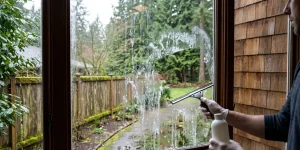


Summer across Washington, Oregon, and Idaho used to mean long evenings on the porch and clear mountain views. These days, it often means checking an air quality app before deciding whether to open a window at all. Wildfire season has become a fixture of the region, and along with the hazy skies, it leaves behind a fine layer of ash on every outdoor surface, glass included.
Most people know that smoke is hard on the lungs. Fewer realize it can be just as hard on their windows. Ash is not ordinary dust. It carries a chemical makeup that reacts with glass surfaces in ways that regular grime never does, and the longer it sits, the more damage it can leave behind.
What Actually Lands on Your Glass When Smoke Rolls In
Wildfire smoke carries more than visible haze. Once it reaches your property, ash, soot, acidic compounds, and fine airborne debris can settle across your windows and surrounding surfaces.
- Ash and Soot Particles:: Ash is made up of fine carbon particles left behind when vegetation, structures, and other materials burn. It is light enough to travel on the wind and sticky enough to cling to almost any surface it touches, including window glass, screens, and frames.
- Acidic Compounds From Combustion:: Burning material releases compounds such as sulfur dioxide and nitrogen oxides. Once these mix with moisture in the air, they form weak acids that settle onto exterior surfaces along with the ash itself. On a roof or a windowsill, this combination can gradually break down protective coatings and sealants.
- Fine Dust Carried on the Wind:: Alongside ash and acidic residue, wildfire events often kick up additional dust and debris from dry ground and disturbed vegetation. This fine particulate settles into every crack and crevice around a window frame, adding to the buildup that eventually needs to be cleaned away.
The Real Wildfire Window Damage Ash Can Cause
The effects of wildfire residue can become more serious when ash remains on glass for extended periods. Recognizing the different forms of damage can help homeowners spot problems early and respond with the right solution.
- Etching from Alkaline Ash:: Some wildfire ash can contain alkaline mineral compounds, and its composition varies depending on what burned. When ash residue becomes wet and remains on glass, it may contribute to chemical staining or etching under certain conditions. Actual glass etching is different from ordinary surface residue and may be permanent once it occurs.
- Streaking, Hazing and Reduced Light:: Even before etching sets in, a film of ash and soot noticeably dulls a window. Sunlight scatters across the residue instead of passing through cleanly, which leaves rooms looking dimmer and windows looking cloudy no matter how much natural light is actually available outside.
- Stress on Frames, Seals and Screens:: Ash does not stop at the glass. It settles into window tracks, seals, and screen mesh, where it can trap moisture against these materials. Over repeated smoke events, this buildup can accelerate wear on weatherstripping and make windows harder to open and close smoothly.
Recognizing Smoke Residue on Glass Before It Becomes Permanent
The tricky part about ash damage is that it often looks like ordinary dirt at first glance. A quick visual check after a smoky stretch can help homeowners tell the difference before it is too late to prevent lasting harm.
| Category | Ordinary Household Dust | Wildfire Ash Residue |
|---|---|---|
| Composition | Soil particles, pollen, fibers | Soot, mineral particles, ash and other combustion residue |
| Chemical properties | Variable | Highly variable depending on what burned |
| Effect on glass | Usually surface-level dirt | Can leave stubborn residue; abrasive particles may scratch when improperly wiped |
| Cleaning urgency | Routine | Prompt removal is advisable after significant ash deposition |
If a window still feels gritty after rinsing or develops recurring haze after cleaning, additional residue may remain on the surface. Persistent marks that do not respond to proper cleaning may warrant professional assessment to determine whether the glass has been stained or etched.
When smoky conditions leave stubborn ash and residue on your windows, turn to professional window cleaning in Washington from World Wide Window Co for a thorough clean that restores clarity and helps protect your glass from lasting buildup.
Best Practices for Cleaning Windows After Wildfire Smoke and Ash
Cleaning technique matters after a smoke event because loose ash can scratch glass when wiped incorrectly. The following practices can help remove residue while minimizing the risk of additional damage.
- Wait Until Outdoor Air Quality Improves:: Cleaning windows during an active smoke advisory exposes you to poor air quality for longer than necessary. Check local air quality readings first and plan the cleanup for a day when conditions have improved.
- Rinse Before You Wipe:: A dry rag dragged across ash-covered glass grinds gritty particles into the surface. Rinsing with a gentle stream of water first loosens loose ash and reduces the risk of scratching.
- Use a Gentle, pH-Balanced Solution:: Harsh chemicals are not necessary and can sometimes react poorly with the acidic residue already on the glass. For most cleaning jobs, a diluted dish soap solution or a dedicated glass cleaner can provide effective results.
- Skip the Dry Cloth:: After rinsing glass, use a soft microfiber cloth or squeegee instead of paper towels or dry rags, which can leave fibers and fine scratches on surfaces contaminated with ash.
- Check Tracks, Sills and Screens:: Ash tends to collect in window tracks and along screen mesh. Vacuuming loose debris from these areas before rinsing the glass prevents grit from being reintroduced during the wipe-down.
- Know When to Call a Professional:: Multi-story homes, hard-to-reach windows, and heavy ash accumulation are all good reasons to bring in a trained crew. Cleaning wildfire ash from windows by hand from the ground is not always practical, and professional equipment reaches areas a garden hose cannot.
Protecting Windows Between Smoke Events
Fire season in the Pacific Northwest is not a single event. It is a stretch of months where conditions can turn smoky within a single day. Building a light maintenance routine during this window keeps ash from accumulating to damaging levels.
- Seasonal Maintenance Habits:: A quick rinse after any noticeably smoky day, even a short one, keeps ash from bonding to the glass over time. This small habit is far less work than dealing with etched glass later in the season.
- Watching the Air Quality Forecast:: Regional agencies publish smoke forecasts throughout fire season. Keeping an eye on these updates helps homeowners plan cleaning around the clearer stretches rather than reacting after damage has already set in.
- Protecting Gutters and Nearby Surfaces:: Ash rarely limits itself to window glass. It also settles into gutters, siding, and outdoor fixtures, where it can mix with rain and form a sludge that clogs downspouts and stains exterior surfaces. Addressing these areas at the same time as window care gives the whole exterior a better chance of surviving fire season without lasting marks.
Frequently Asked Questions
Can wildfire ash damage window glass permanently?
Yes, wildfire ash can leave stubborn deposits on glass, and abrasive particles may scratch the surface if they are wiped away incorrectly. Under certain conditions, particular ash residues may also contribute to chemical etching. Once genuine glass etching occurs, ordinary cleaning generally cannot reverse it.
How soon after a smoky day should I clean my windows?
If significant ash has settled on your windows, prompt cleaning is a sensible precaution. Avoid dry wiping the residue, and wait for outdoor air conditions to improve before performing exterior cleanup.
Is it safe to use a garden hose to rinse ash off windows?
A gentle rinse can help remove loose ash before contact cleaning. Avoid using high pressure or directing contaminated runoff toward storm drains.
Does wildfire smoke affect window screens and frames too?
It does. Ash settles into screen mesh and frame tracks, where trapped moisture can add wear over time. Cleaning these areas alongside the glass helps windows operate smoothly.
How often should windows be cleaned during an active wildfire season?
There is no single cleaning schedule that applies to every home. Check your windows after significant smoke or ash events and clean them when visible residue accumulates.
Bottom Line
Wildfire smoke has become a predictable part of summer across Washington, Oregon, and Idaho, and the ash it leaves behind is more than a cosmetic nuisance. Left on the glass too long, it can etch the surface permanently and shorten the life of otherwise healthy windows. A little attention after each smoky stretch, paired with a professional deep clean when buildup gets ahead of you, keeps glass clear and protects the investment you have made in your home.
With more than four decades of experience, World Wide Window Co knows how Pacific Northwest weather can affect your home’s windows, especially during wildfire season. For dependable window cleaning in Pacific Northwest, homeowners can trust our experienced team to remove seasonal buildup, restore clear views, and keep their windows looking their best.