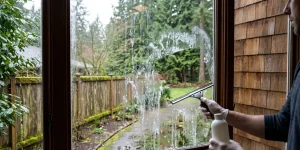


You’ve probably seen the cloudy, white film slowly creeping across your windows that no amount of regular glass cleaner seems to fix. It doesn’t wipe away with a paper towel, and it becomes more severe with each passing season. If you live in Washington State, Oregon, or Idaho, you’re dealing with a very common problem: hard water stains on windows in Washington State, and the Pacific Northwest, despite all its rain, is no stranger to this issue.
This guide walks you through what causes these stains, how to safely remove them, and the smartest ways to keep them from coming back.
What Are Hard Water Stains and Why Do Windows Get Them?
Hard water stains form when water containing high concentrations of dissolved minerals, primarily calcium and magnesium, lands on glass and evaporates. The water disappears, but the minerals stay behind and bond to the surface. Over time, these deposits build into a chalky, hazy film that becomes progressively harder to remove.
In the Pacific Northwest, this is especially common in Eastern Washington, including areas around Spokane, as well as parts of Oregon and Idaho, where groundwater carries a heavier mineral load. Even homeowners near Seattle and Bellevue experience staining from irrigation systems, roof runoff, and tap water used in DIY cleaning. The longer deposits go untreated, the more deeply they bond, and in severe cases, they begin to etch into the glass permanently.
Common Sources of Hard Water Stains on Pacific Northwest Windows
Understanding where these stains come from is the first step toward preventing them. The most frequent culprits include:
- Irrigation and sprinkler systems that hit windows repeatedly during the growing season
- Roof and gutter runoff that carries mineral-rich water across exterior glass after rain
- Tap water used in DIY cleaning that deposits new minerals each time it dries
- Window screens that trap moisture and hold it against the glass
- Nearby construction activity where concrete and masonry work releases calcium-heavy water
Once you identify the main source on your property, you can take targeted steps to reduce exposure and protect your glass long-term.
How to Remove Hard Water Stains with DIY Methods That Work
For light-to-moderate staining, a few household approaches can deliver solid results. If you are looking to remove hard water stains from windows in Seattle or anywhere across the Pacific Northwest, the key is to act early; the longer deposits sit, the harder they are to lift without professional help.
White Vinegar Solution
White vinegar is mildly acidic, making it effective at breaking down calcium and magnesium deposits. Mix white vinegar and distilled water in equal quantities, apply with a microfiber cloth, and let it soak for 5 to 10 minutes before gently scrubbing. Always rinse with distilled water rather than tap water, or you risk depositing new minerals and undoing your work.
Baking Soda Paste
For slightly heavier buildup, baking soda paste offers more cleaning power without scratching the glass. Mix it with a small amount of water to make a thick paste before spreading it directly to the stain. Carefully scrub in small circular motions with a soft cloth, then rinse thoroughly with distilled water when finished.
Lemon Juice
Fresh lemon juice is a natural acid that works well on lighter deposits. Apply the mixture evenly over the stain and allow it to sit for several minutes, then wipe clean and rinse. It is a practical option for spot treatment on smaller areas.
Commercial Hard Water Removers
Several glass-safe commercial products are specifically formulated for mineral removal. Always choose one labeled safe for glass, avoid anything containing abrasives, and follow the manufacturer’s instructions closely.
Important Cautions
Never use abrasive scrubbing pads, steel wool, or razor blades on treated or coated glass. If the stain does not improve after two or three careful attempts, stop and seek professional treatment rather than risk permanent etching.
When to Call a Professional for Window Stain Removal in the Pacific Northwest
DIY methods have their limits. If stains have been sitting for more than one season, or if you feel a rough texture when running a finger across the glass, the minerals have likely begun to etch into the surface. This is where window stain removal Pacific Northwest professionals make a real difference.
Professional window cleaners use specialized polishing compounds, commercial-grade mineral removers, and glass restoration techniques that go well beyond what household products offer. These tools lift deeply bonded deposits without causing additional surface damage.
World Wide Window Co brings this level of care to residential window cleaning services across Washington, Oregon, and Idaho. Our team uses a pure water purification system and professional-grade equipment. Contact us for a free, no-obligation quote today!
How to Prevent Hard Water Stains From Coming Back
Removal is important, but prevention saves you time and money in the long term. Here are the most effective strategies for keeping hard water stains on windows in Washington State from becoming a recurring problem.
- Adjust Your Sprinkler System:: If irrigation heads are directing water toward your windows, repositioning them takes minutes and prevents months of stain buildup. Check your system after adjusting to confirm the spray no longer reaches the glass.
- Use Distilled Water for DIY Cleaning:: Tap water in many parts of Washington and Idaho contains enough dissolved minerals to leave deposits when it dries. Using distilled water for any DIY cleaning task eliminates this issue entirely.
- Apply a Protective Glass Coating:: Water-repellent coatings create a barrier that causes water to bead up and roll off the glass rather than sit and evaporate. These coatings need periodic reapplication but significantly slow mineral accumulation between professional cleanings.
- Keep Gutters Clean:: Blocked gutters overflow, sending mineral-laden water running directly across windows. Regular gutter cleaning keeps water flowing through the correct channels and away from your glass.
- Schedule Routine Professional Cleaning:: The most reliable prevention is consistency. Regular professional cleaning removes buildup before it bonds deeply to the glass. For most Pacific Northwest homeowners, every three to four months is the right interval, with more frequent visits for properties with heavy irrigation or hard water exposure.
Why is Window Cleaning Critical for Residential and Commercial Properties?
Hard water staining is not just a residential concern. Commercial window cleaning in Bellevue, WA, and across the Pacific Northwest is equally critical for businesses dealing with mineral buildup on storefront and office glass. Stained windows affect curb appeal, customer perception, and overall professionalism.
High-traffic storefronts face constant exposure to urban pollution and irrigation runoff. Without a consistent professional cleaning schedule, hard water deposits on commercial glass can progress to etching within a single season, making restoration far costlier than routine maintenance would have been.
Frequently Asked Questions
What do professional window cleaners use on hard water stains?
Professionals use commercial-grade mineral removers and polishing compounds designed to dissolve calcium and magnesium deposits without damaging the glass. These products are far more concentrated and effective than anything available for consumer use.
How Do Experts Eliminate Hard Water Stains from Glass?
The process starts with a specialized mineral-removal solution applied to the stained area, followed by gentle agitation with professional pads and a rinse with purified, de-ionized water. For etched glass, polishing compounds are used before a protective sealant is applied.
Should I let vinegar sit on windows or wipe it off?
Let it sit for about 5 to 10 minutes for light stains, but do not let it dry on the glass. Dried vinegar can leave its own residue. Always wipe and rinse with distilled water promptly after the soak period.
Will WD-40 remove hard water stains on windows?
WD-40 can loosen some light deposits, but it is not a reliable solution for hard water stains. It can leave a greasy residue that collects dust, dirt, and grime, making windows harder to clean afterward. A vinegar solution or commercial mineral remover is a better choice.
What do professional window cleaners use in their water?
Most professionals use purified, de-ionized water with a zero total dissolved solids reading. This water leaves no mineral residue when it dries, which is why professional results stay cleaner longer than tap water cleaning.
What should you not put WD-40 on?
Avoid using WD-40 on painted surfaces, rubber seals, window frames, and tinted or coated glass. It can degrade rubber, stain painted finishes, and compromise protective coatings on specialty glass surfaces.
Conclusion
Hard water stains are one of the most persistent window maintenance challenges in the Pacific Northwest. The combination of mineral-heavy water, seasonal irrigation, and the region’s wet climate can permanently damage glass if left unaddressed. With early action, smart DIY methods for mild staining, and consistent professional care for deeper deposits, you can protect your windows and maintain clear views year-round. Stay ahead of hard water buildup before it becomes an expensive, irreversible problem.
World Wide Window Co delivers trusted exterior window-cleaning services for residential and commercial clients across Washington, Oregon, and Idaho. Get in touch with us today!