

Solar panels promise clean energy and lower bills, but the glass on your roof needs a clear path to the sun. Homeowners across Washington, Oregon, and Idaho assume the region’s steady rainfall keeps everything spotless, yet local weather brings its own mix of pollen, moss, and wildfire ash. That mix is exactly why solar panel cleaning for Pacific Northwest homeowners follows a different set of rules than any advice written for drier states. Panels here need attention, for reasons specific to this region.
This guide explains the science, the costs, and the safe steps to keep your system performing at its best.
Do Solar Panels Need to be Cleaned in the Pacific Northwest?
Rain washes away loose dust, yet it leaves behind the sticky residue that actually blocks sunlight.
Spring Pollen That Turns Into Paste
Douglas fir, alder, and cedar release heavy pollen each spring, and rain turns that pollen into a thin paste on the glass. Once it dries, the paste hardens and clings to the panel surface without washing away. This layer quietly blocks sunlight, so production drops before most homeowners notice anything wrong.
Moss and Algae Around the Frame
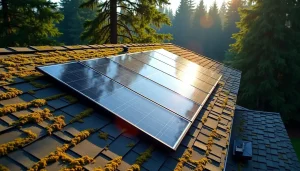
Damp winters give moss and algae plenty of time to settle near the edges of each panel. Left alone, this growth can trap moisture against the glass and the frame. Over months, it spreads across the panel surface and cuts into the sunlight reaching the cells.
Wildfire Ash During Dry Summers
Late summer wildfires send fine ash across Washington, Oregon, and Idaho, and that ash settles on rooftops within days. Morning dew or light rain can bake the ash onto the glass before a stronger storm arrives. The result is a fine gray film that lowers output during some of the sunniest days of the year.
How Often Should Solar Panels Be Cleaned Across Washington, Oregon, and Idaho?
The right cleaning schedule depends more on what surrounds your roof than on any fixed calendar date.
Homes Near Tall Evergreen Trees
Properties shaded by fir, pine, or cedar trees collect sap, needles, and pollen at a faster rate than open rooftops. Owners in this setting usually need a check every three to four months. A quick look from the ground after a dry stretch is usually enough to spot the buildup.
Spaces Near Busy Roads or Construction
Traffic and nearby construction sites release fine particles that settle on glass surfaces day after day. These homes benefit from a cleaning every three months during active construction seasons. A long gap between cleanings lets grit build a layer that rain cannot lift.
Houses Along the Coast
Salt mist from Puget Sound or the Oregon coast leaves a fine residue that dries into a stubborn film. This residue needs a gentler cleaning approach than ordinary dust. Coastal homeowners typically schedule a cleaning twice a year at minimum.
Residential Areas with Low Panel Tilt
Panels mounted at a shallow angle hold onto dirt and pollen far longer than steeply tilted arrays. Gravity and rain do less work when the surface sits nearly flat. A twice-yearly schedule keeps output steady for these lower-angle installations.
Homes That Depend Only on Natural Rainfall
Some homeowners skip cleaning entirely and count on the region’s rain to handle everything. This approach works reasonably well for open, unshaded roofs with steep tilt. For most other properties, a scheduled check twice a year prevents small losses from turning into bigger ones over a full season.
Clear glass tells its own story about what a property collects between seasons. World Wide Window Co brings that same close attention to every visit across Washington, Oregon, and Idaho, so pollen and grime never get the chance to settle in. Schedule a cleaning today!
Does Dirty Solar Panels Affect Energy Output?
Every layer of grime sits between sunlight and the cells that turn it into power. A thin film of dust or pollen typically reduces output by a small percentage, usually under 10% in most homes. Homeowners rarely notice this drop right away, since it happens gradually, and comparing your monitoring app with last year’s numbers is the clearest way to catch it early.
Moss, bird droppings, and baked-on pollen paste create a much stronger barrier than simple dust. Field studies on panels left uncleaned for months have recorded losses of 15-30% in similar climates. That difference is the real story behind how buildup affects performance, and it is the point at which a professional visit quickly pays for itself.
The Cost of Professional Solar Panel Cleaning in the Pacific Northwest
Pricing follows a fairly predictable pattern once you know what drives it.
Professional Solar Panel Cleaning Cost by Panel Count
Most companies in this region charge between $8 and $20 per panel for a standard cleaning visit. A typical rooftop system of twenty to twenty-five panels usually costs between one hundred fifty and four hundred dollars per visit. Flat rate pricing is also common for smaller residential jobs.
What Raises or Lowers the Price
Roof pitch, panel count, and the level of moss or pollen buildup all affect the final quote. Steep roofs and second story access typically add a bit more due to the extra safety equipment required. Homes with an easy ground-level layout usually land at the lower end of the price range.
Whether the Expense Is Worth Paying
A property that recovers fifteen to thirty percent of lost output on a heavily soiled system can pay back the cost of a single visit within one billing cycle. Lightly soiled panels see a smaller return, so a monitoring check before booking helps set the right expectation. A cleaning every six to twelve months keeps the math in most homeowners’ favor.
Safe Cleaning Practices for Pacific Northwest Homeowners
The right technique protects both the panels and the roof underneath them.
Skip the Pressure Washer Completely
High-pressure water can strip the anti-reflective coating right off the glass surface. It can also force moisture past the seals and into the wiring underneath. A soft brush and a garden hose handle the job safely without voiding a manufacturer’s warranty.
Pick the Right Season for a Deep Clean
Late spring, after the heaviest pollen drop, gives the clearest window for a thorough cleaning. A second check in early fall helps catch any wildfire ash from a dry summer. Winter cleaning still matters, since every bit of daylight counts during the shortest days.
Watch Moss Growing Near the Frame
Moss that spreads beneath the panel frame can compromise the seal and allow moisture to reach the backsheet. Left unchecked for a full season, this growth can void a manufacturer’s warranty entirely. Regular branch trimming also slows how quickly moss returns after each cleaning.
Know When a Professional Visit Makes Sense
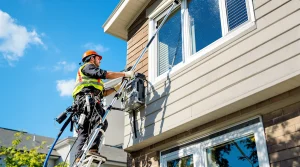
Steep roofs, second story access, and stubborn moss are all strong reasons to call a trained technician. Professionals carry safety harnesses, deionized water systems, and the experience to work around active electrical components. For most homeowners without ladder experience, this option protects both personal safety and the system itself.
Quick Tips for Keeping Solar Panels Clear in the Pacific Northwest
A few simple habits keep panels performing well between scheduled cleanings.
- Check your monitoring app monthly: A steady drop in output that weather does not explain is usually the first sign of buildup.
- Look at the array from the ground after a dry stretch: Pollen film and moss are usually easier to spot from a distance than up close.
- Trim back branches from nearby evergreens: Less shade and less sap means less buildup for the panels to deal with.
- Rinse light dust with a garden hose if access is safe and easy: This stretches the time between full cleanings without any risk.
- Schedule the main cleaning for late spring: Timing it right after the heaviest pollen drop sets the panels up for peak summer sun.
- Keep a simple record of every cleaning and inspection: Comparing output year over year makes it easy to spot a real problem early.
- Skip household glass cleaners and dish soap: These typically leave a residue that attracts more dirt than it removes.
Wrap Up
Rain plays a real part in keeping panels clear across Washington, Oregon, and Idaho, but it never tells the whole story. Pollen, moss, and ash settle in ways a drizzle cannot fully remove, and the resulting film quietly lowers energy output over time. A simple twice-yearly check, paired with a professional visit when buildup gets stubborn, keeps a system running close to its full potential. Staying ahead of pollen, moss, and ash is central to solar panel cleaning for Pacific Northwest homeowners, protecting both the roof investment and the savings on every bill.
A property that looks cared for from every angle makes a stronger impression, indoors and out. World Wide Window Co supports homeowners and business owners alike with a dependable [storefront window cleaning service](/services/commercial-window-cleaning) across Washington, Oregon, and Idaho. Contact us today!